Project inputs
- Fire protection plans and riser diagrams
- Sprinkler and device schedules
- Applicable project specifications
Review the drawings, quantities and coordination points commonly involved in commercial fire protection takeoffs. Exact service scope requires confirmation.
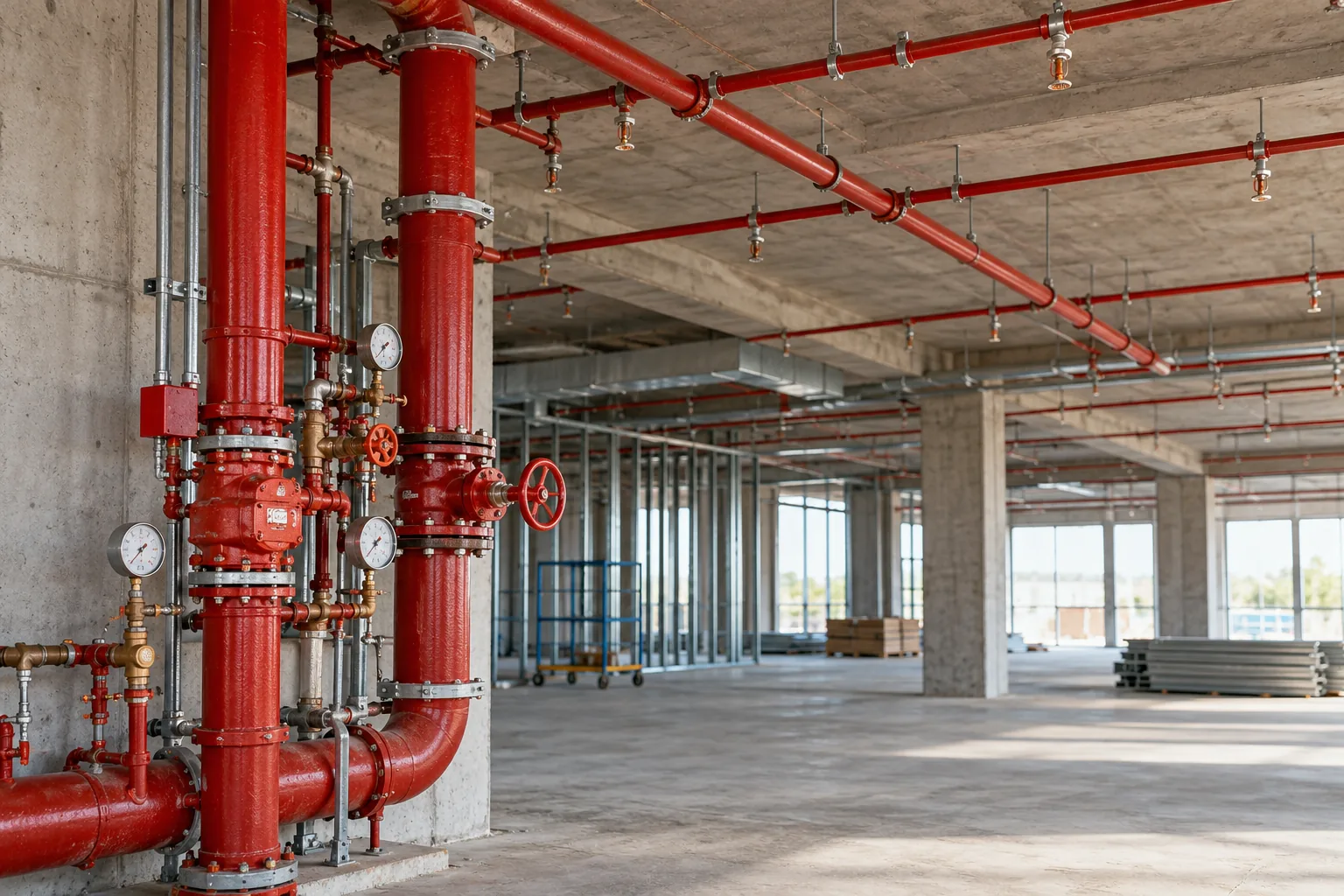
Review the drawings, quantities and coordination points commonly involved in commercial fire protection takeoffs. Exact service scope requires confirmation.
Review the latest documents and define the requested estimating scope before pricing. The checklist below identifies typical inputs, quantities and coordination issues; it is not a claim that every project or trade is available.
DISCUSS YOUR PROJECT ↗Specific information to help define the work package and avoid missed scope.
A simplified worksheet showing how measurement records can be organized. No quantities or completed client project are represented.
| Work item / review category | Measurement basis | Drawing reference | Review note |
|---|---|---|---|
| Sprinkler heads and devices | Confirm unit from plans | Verify issued sheet / schedule | Engineering and hydraulic calculations |
| Piping by size and system | Confirm unit from plans | Verify issued sheet / schedule | Fire alarm versus sprinkler scope |
| Valves and riser equipment | Confirm unit from plans | Verify issued sheet / schedule | Testing, flushing and inspections |
Each work item needs a drawing reference, appropriate unit and documented scope check. This visual is illustrative, not a client drawing.
See illustrative deliverable format →Illustrative format only — actual quantities, prices and document references require project drawings.
Check current plans, specifications, schedules and addenda.
Organize units and references by work item.
Check interfaces, exclusions and unanswered questions.
Reconcile quantities and document the review basis.
Measurement principles, scope boundaries and review considerations specific to this topic.
It reviews sprinkler heads and devices, piping by size and system, valves and riser equipment against project drawings and specifications, with measurement units, exclusions and coordination questions recorded for contractor review.
For a scope review, share the drawing issue, trade requirements, project state and bid deadline. Confirm actual availability and deliverables before engagement.
Begin with the latest issued drawing set and a revision register. For fire protection, confirm that fire protection plans and riser diagrams, sprinkler and device schedules, applicable project specifications are available before measuring. Mark any missing information as an open question rather than inventing dimensions or quantities.
Build separate work items for sprinkler heads and devices, piping by size and system and valves and riser equipment. Record each item’s drawing reference, specification section, measurement unit and responsible trade. This separation makes it easier to compare subcontractor proposals without counting the same assembly twice.
Use a quantity worksheet with columns for drawing reference, assembly or item, measured dimension, unit, gross quantity, deduction, net quantity and review status. The appropriate measurement basis depends on the issued documents and specifications; do not convert between area, length, count and volume without showing the underlying calculation.
Reconcile the worksheet against schedules and details. For fire protection, specifically review engineering and hydraulic calculations; fire alarm versus sprinkler scope; testing, flushing and inspections. Carry unclear responsibilities into the exclusions and clarifications register.
Illustrative worksheet: three separately scheduled items at 12 EA, 8 EA and 5 EA produce 25 EA only if all three use the same unit and belong to the same scope. If one item is measured in LF or SF, keep it on its own line. These numbers demonstrate reconciliation, not a real project estimate.
Before assigning prices, compare the takeoff with the specification and bid instructions. Identify contractor-furnished versus owner-furnished materials, allowances, alternates, access constraints and procurement lead times. Rates must be sourced and validated for the actual project location and bid date.
A trade takeoff does not automatically include engineering, permitting, testing or design responsibility. Clarify engineering and hydraulic calculations, fire alarm versus sprinkler scope, testing, flushing and inspections in writing before treating any quantity as a final bid commitment.
This is a hypothetical arithmetic example for understanding takeoff units, not a completed project or a market quotation.
Illustrative head schedule: 18 sprinkler heads on one floor plus 22 on another equals 40 EA; piping and hydraulic design responsibilities remain separate.
Project categories illustrate different drawing packages and estimating considerations; they are not a completed-project portfolio.
Share the latest issued drawings, specifications, relevant schedules and addenda. Include the project location, design stage and requested deadline; missing documents should be recorded as open questions.
The review may cover sprinkler heads and devices, piping by size and system, valves and riser equipment. Final inclusions, exclusions, measurement units and deliverables must be confirmed for the specific project.
Quantities should be traced to drawing references, measured in the appropriate units, reconciled against schedules and checked for overlapping work packages and revisions.
No. The examples are educational. Project-specific rates, deliverables, availability and timelines require a separate scope review.
Tell us about your project, drawings and bid date. This is an inquiry, not a confirmed quote or commitment.
Trade inclusions, exclusions, professional responsibilities and actual estimating availability must be confirmed for each project.
Educational examples do not represent completed client projects, confirmed availability or guaranteed results.